Moonwake Coffee Roasters - Banko Taratu Smallholder Farmers - Washed Landrace | Ethiopia
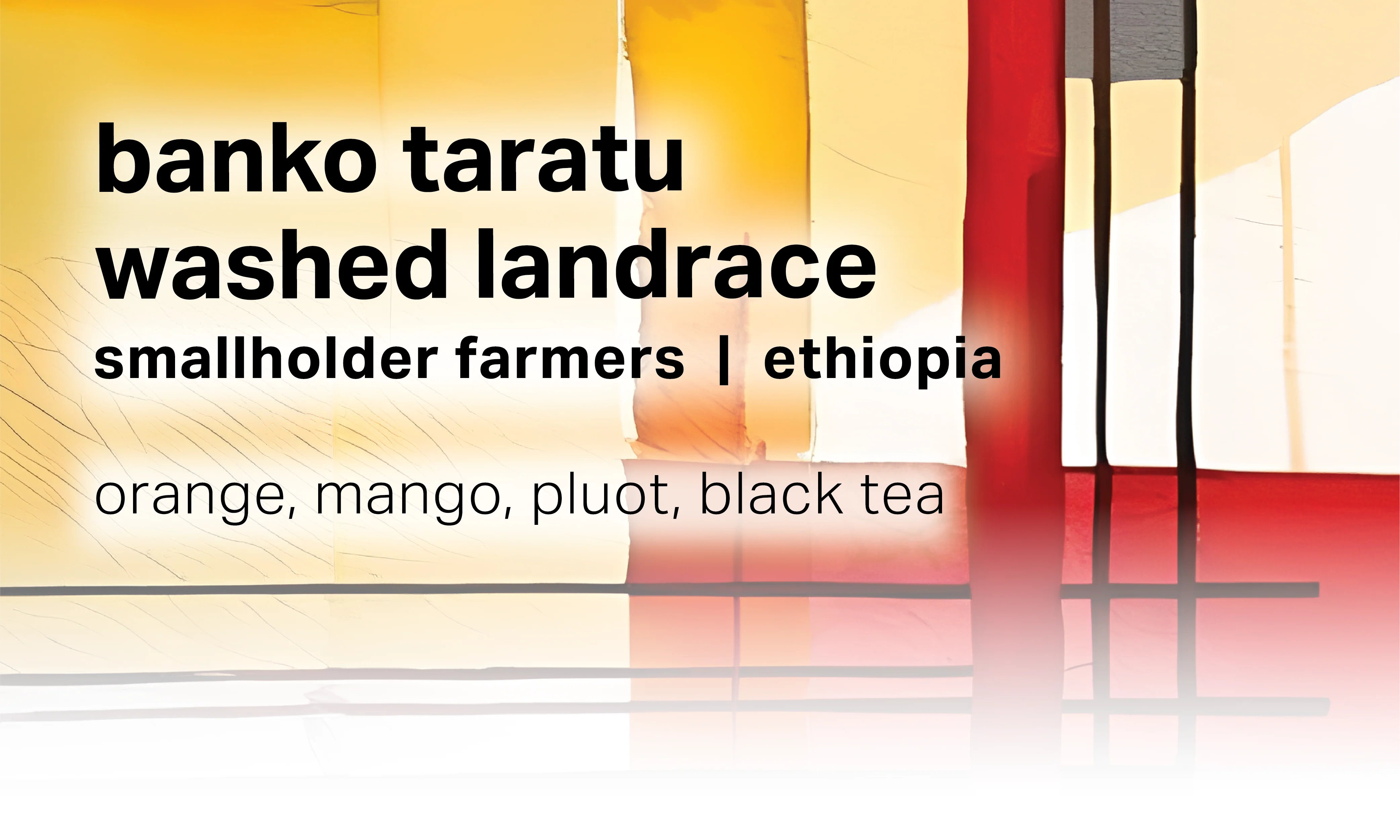
Ethiopia — Smallholder Farmers Banko Taratu Landrace (Washed)
Tastes Like — 🍊 Orange • 🥭 Mango • 🍑 Pluot • 🍵 Black Tea
DETAILS
- Producer: Smallholder Farmers, Banko Taratu Mill
- Farm: Multiple smallholder plots, Banko Taratu washing station
- Region: Gedeb District, Gedeo Zone, Yirgacheffe, Ethiopia
- Varietal: Landrace
- Process: Washed
- Altitude: 1,900–2,300 MASL
- Size: 227g
INTRO
Banko Taratu is one of the most celebrated washing stations in Ethiopia's Gedeo Zone — a region that sits just south of Yirgacheffe and consistently produces coffees of extraordinary clarity and aromatic complexity. The mill processes cherries from hundreds of smallholder farmers working some of the highest-altitude plots in the world, where cool temperatures and ample rainfall slow cherry development and deepen flavour intensity.
This washed landrace lot is a textbook expression of everything that makes high-elevation Ethiopian coffee so compelling: a sweeping citrus brightness, tropical fruit sweetness, and a refined black tea finish that becomes more elegant as the cup cools.
THE PRODUCER
The Banko Taratu washing station sits at the heart of the Gedeb district, drawing cherries from over 300 family-owned farms spread across plots ranging from 1,900 to 2,300 metres above sea level. These are among the highest-grown coffees in the world, and the altitude is central to their character: slow maturation at elevation concentrates sugars and builds the layered complexity the region is known for.
Farmers in this area cultivate coffee in traditional polyculture gardens alongside native trees and food crops, using organic practices rooted in generations of knowledge. Coffee cherries are handpicked and delivered to the mill where they undergo careful sorting and processing — a communal effort that underpins the consistency of the lot year after year.
Ethiopia's landrace varieties — indigenous to the region and shaped by centuries of natural selection — carry a genetic diversity that commercial varietals simply cannot replicate, lending Banko Taratu coffees an expressive, almost wild quality that is entirely their own.
THE PROCESS
The Washed process at Banko Taratu involves:
- 🍒 Selective Harvest — Cherries are hand-picked at peak ripeness by individual smallholder farmers and delivered to the central mill
- ✅ Sorting & Floating — Cherries are sorted on arrival and floated in water to remove damaged or less dense fruit
- 🔧 Depulping — Outer cherry skin is removed mechanically, exposing the mucilage-coated parchment
- 💧 Fermentation — Parchment is soaked in clean spring water for 24–48 hours, allowing natural fermentation to break down and wash away the remaining mucilage
- ☀️ Raised Bed Drying — Washed parchment is laid on African drying beds and shade-dried with frequent turning until moisture content stabilises at around 11%
This traditional approach preserves the pure, terroir-driven character of the landrace varieties, producing a cup of exceptional clarity and elegance.
THE CUP
Banko Taratu in a glass: sweet orange and mango brightness open the cup, supported by the stone-fruit juiciness of ripe pluot. As it cools, a refined, honey-tinged black tea note emerges — clean, floral, and beautifully balanced. This is high-altitude Ethiopian washed coffee at its most expressive.
Flavour Notes
- 🍊 Orange
- 🥭 Mango
- 🍑 Pluot
- 🍵 Black Tea
Ethiopia — Smallholder Farmers Banko Taratu Landrace (Washed)
Tastes Like — 🍊 Orange • 🥭 Mango • 🍑 Pluot • 🍵 Black Tea
DETAILS
- Producer: Smallholder Farmers, Banko Taratu Mill
- Farm: Multiple smallholder plots, Banko Taratu washing station
- Region: Gedeb District, Gedeo Zone, Yirgacheffe, Ethiopia
- Varietal: Landrace
- Process: Washed
- Altitude: 1,900–2,300 MASL
- Size: 227g
INTRO
Banko Taratu is one of the most celebrated washing stations in Ethiopia's Gedeo Zone — a region that sits just south of Yirgacheffe and consistently produces coffees of extraordinary clarity and aromatic complexity. The mill processes cherries from hundreds of smallholder farmers working some of the highest-altitude plots in the world, where cool temperatures and ample rainfall slow cherry development and deepen flavour intensity.
This washed landrace lot is a textbook expression of everything that makes high-elevation Ethiopian coffee so compelling: a sweeping citrus brightness, tropical fruit sweetness, and a refined black tea finish that becomes more elegant as the cup cools.
THE PRODUCER
The Banko Taratu washing station sits at the heart of the Gedeb district, drawing cherries from over 300 family-owned farms spread across plots ranging from 1,900 to 2,300 metres above sea level. These are among the highest-grown coffees in the world, and the altitude is central to their character: slow maturation at elevation concentrates sugars and builds the layered complexity the region is known for.
Farmers in this area cultivate coffee in traditional polyculture gardens alongside native trees and food crops, using organic practices rooted in generations of knowledge. Coffee cherries are handpicked and delivered to the mill where they undergo careful sorting and processing — a communal effort that underpins the consistency of the lot year after year.
Ethiopia's landrace varieties — indigenous to the region and shaped by centuries of natural selection — carry a genetic diversity that commercial varietals simply cannot replicate, lending Banko Taratu coffees an expressive, almost wild quality that is entirely their own.
THE PROCESS
The Washed process at Banko Taratu involves:
- 🍒 Selective Harvest — Cherries are hand-picked at peak ripeness by individual smallholder farmers and delivered to the central mill
- ✅ Sorting & Floating — Cherries are sorted on arrival and floated in water to remove damaged or less dense fruit
- 🔧 Depulping — Outer cherry skin is removed mechanically, exposing the mucilage-coated parchment
- 💧 Fermentation — Parchment is soaked in clean spring water for 24–48 hours, allowing natural fermentation to break down and wash away the remaining mucilage
- ☀️ Raised Bed Drying — Washed parchment is laid on African drying beds and shade-dried with frequent turning until moisture content stabilises at around 11%
This traditional approach preserves the pure, terroir-driven character of the landrace varieties, producing a cup of exceptional clarity and elegance.
THE CUP
Banko Taratu in a glass: sweet orange and mango brightness open the cup, supported by the stone-fruit juiciness of ripe pluot. As it cools, a refined, honey-tinged black tea note emerges — clean, floral, and beautifully balanced. This is high-altitude Ethiopian washed coffee at its most expressive.
Flavour Notes
- 🍊 Orange
- 🥭 Mango
- 🍑 Pluot
- 🍵 Black Tea
Original: $38.08
-65%$38.08
$13.33Description
Ethiopia — Smallholder Farmers Banko Taratu Landrace (Washed)
Tastes Like — 🍊 Orange • 🥭 Mango • 🍑 Pluot • 🍵 Black Tea
DETAILS
- Producer: Smallholder Farmers, Banko Taratu Mill
- Farm: Multiple smallholder plots, Banko Taratu washing station
- Region: Gedeb District, Gedeo Zone, Yirgacheffe, Ethiopia
- Varietal: Landrace
- Process: Washed
- Altitude: 1,900–2,300 MASL
- Size: 227g
INTRO
Banko Taratu is one of the most celebrated washing stations in Ethiopia's Gedeo Zone — a region that sits just south of Yirgacheffe and consistently produces coffees of extraordinary clarity and aromatic complexity. The mill processes cherries from hundreds of smallholder farmers working some of the highest-altitude plots in the world, where cool temperatures and ample rainfall slow cherry development and deepen flavour intensity.
This washed landrace lot is a textbook expression of everything that makes high-elevation Ethiopian coffee so compelling: a sweeping citrus brightness, tropical fruit sweetness, and a refined black tea finish that becomes more elegant as the cup cools.
THE PRODUCER
The Banko Taratu washing station sits at the heart of the Gedeb district, drawing cherries from over 300 family-owned farms spread across plots ranging from 1,900 to 2,300 metres above sea level. These are among the highest-grown coffees in the world, and the altitude is central to their character: slow maturation at elevation concentrates sugars and builds the layered complexity the region is known for.
Farmers in this area cultivate coffee in traditional polyculture gardens alongside native trees and food crops, using organic practices rooted in generations of knowledge. Coffee cherries are handpicked and delivered to the mill where they undergo careful sorting and processing — a communal effort that underpins the consistency of the lot year after year.
Ethiopia's landrace varieties — indigenous to the region and shaped by centuries of natural selection — carry a genetic diversity that commercial varietals simply cannot replicate, lending Banko Taratu coffees an expressive, almost wild quality that is entirely their own.
THE PROCESS
The Washed process at Banko Taratu involves:
- 🍒 Selective Harvest — Cherries are hand-picked at peak ripeness by individual smallholder farmers and delivered to the central mill
- ✅ Sorting & Floating — Cherries are sorted on arrival and floated in water to remove damaged or less dense fruit
- 🔧 Depulping — Outer cherry skin is removed mechanically, exposing the mucilage-coated parchment
- 💧 Fermentation — Parchment is soaked in clean spring water for 24–48 hours, allowing natural fermentation to break down and wash away the remaining mucilage
- ☀️ Raised Bed Drying — Washed parchment is laid on African drying beds and shade-dried with frequent turning until moisture content stabilises at around 11%
This traditional approach preserves the pure, terroir-driven character of the landrace varieties, producing a cup of exceptional clarity and elegance.
THE CUP
Banko Taratu in a glass: sweet orange and mango brightness open the cup, supported by the stone-fruit juiciness of ripe pluot. As it cools, a refined, honey-tinged black tea note emerges — clean, floral, and beautifully balanced. This is high-altitude Ethiopian washed coffee at its most expressive.
Flavour Notes
- 🍊 Orange
- 🥭 Mango
- 🍑 Pluot
- 🍵 Black Tea