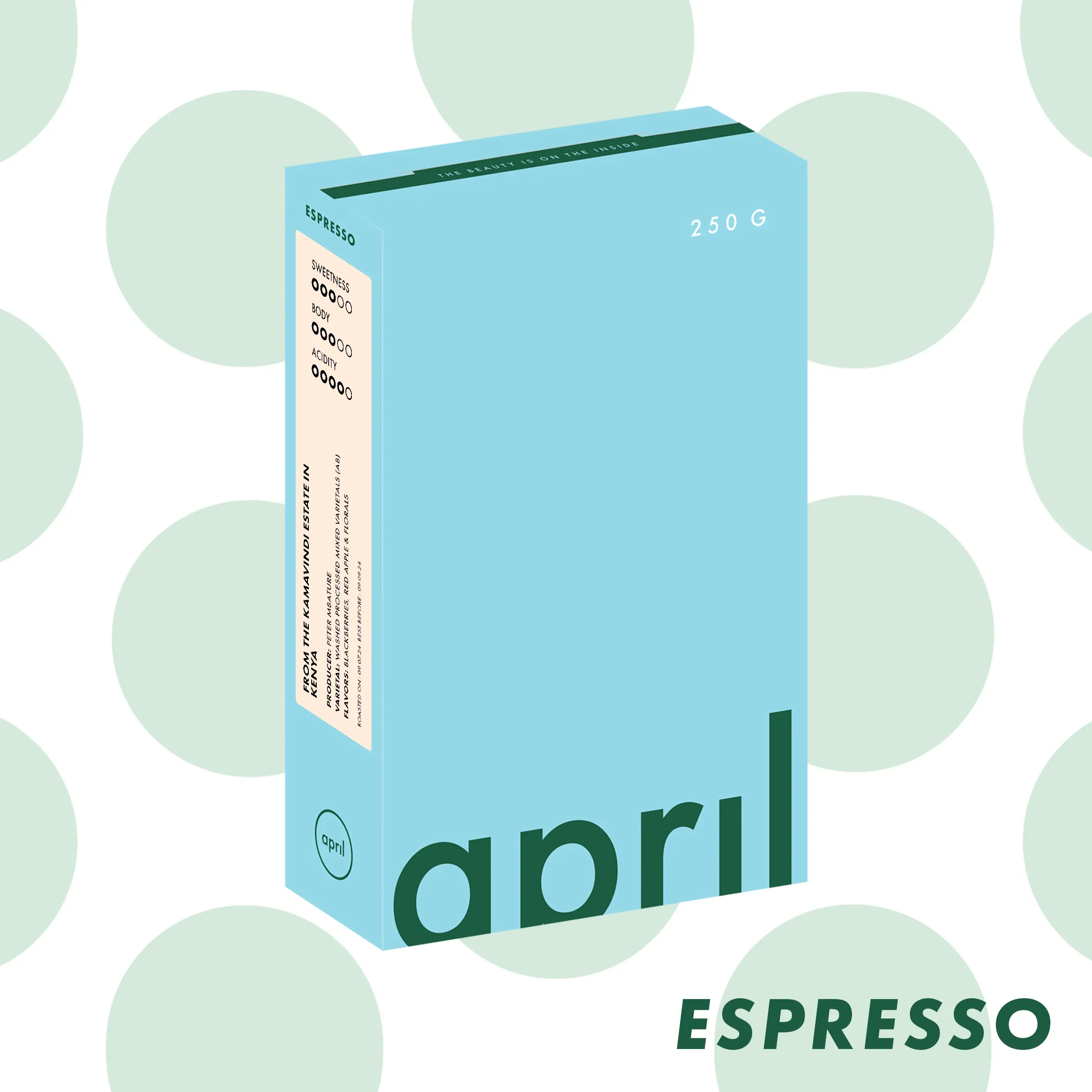
April - Kamavindi - Kenya - Washed SL34 (AB)
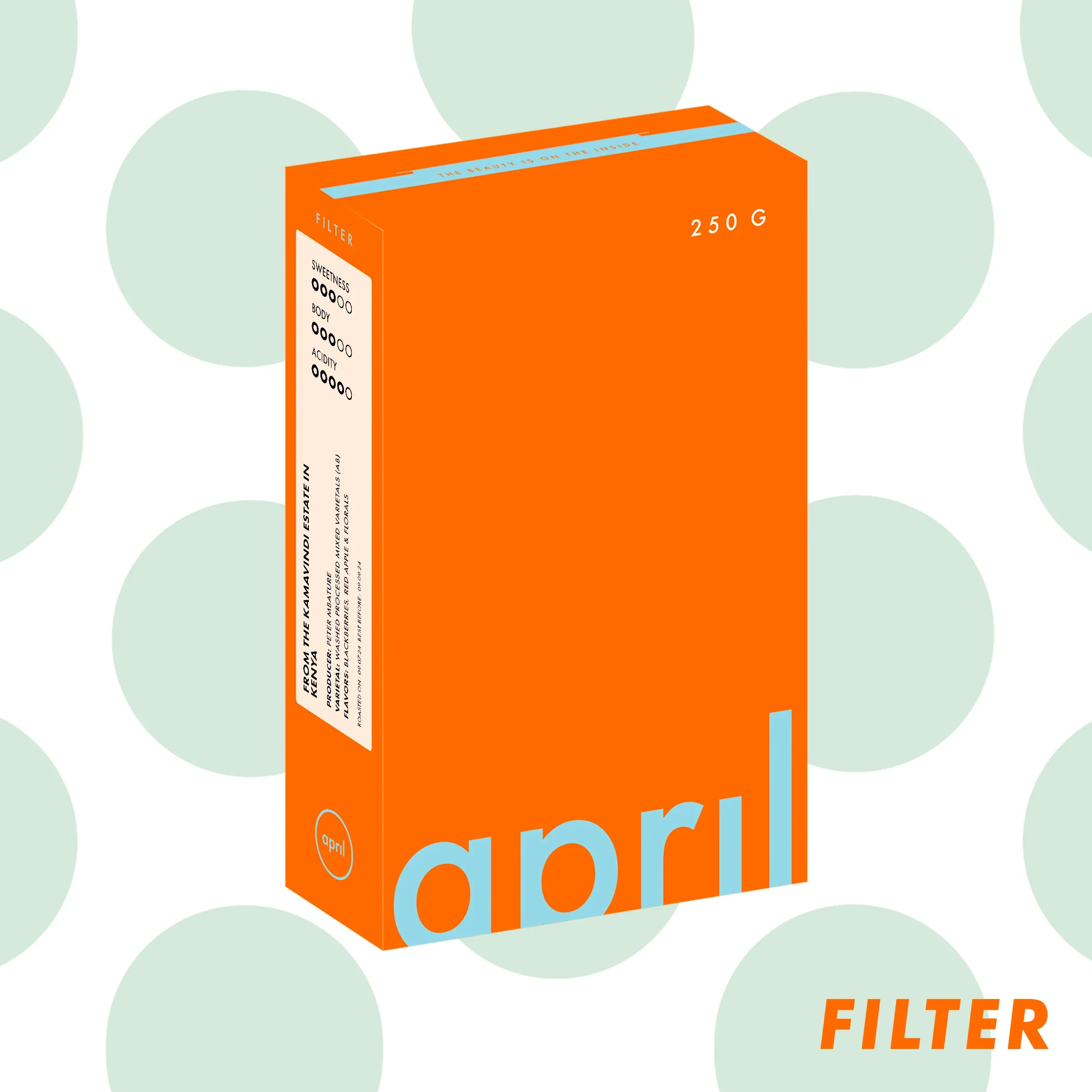
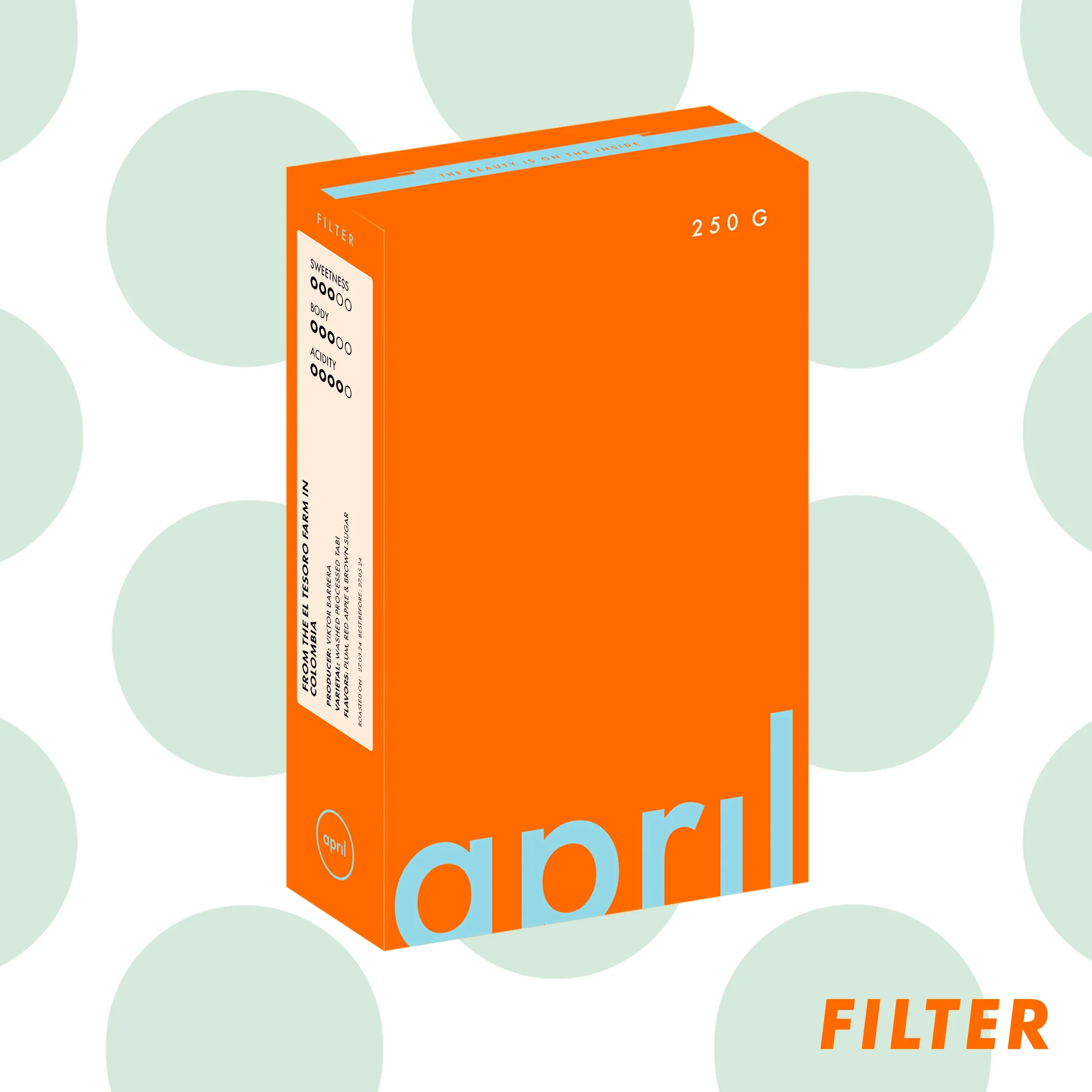
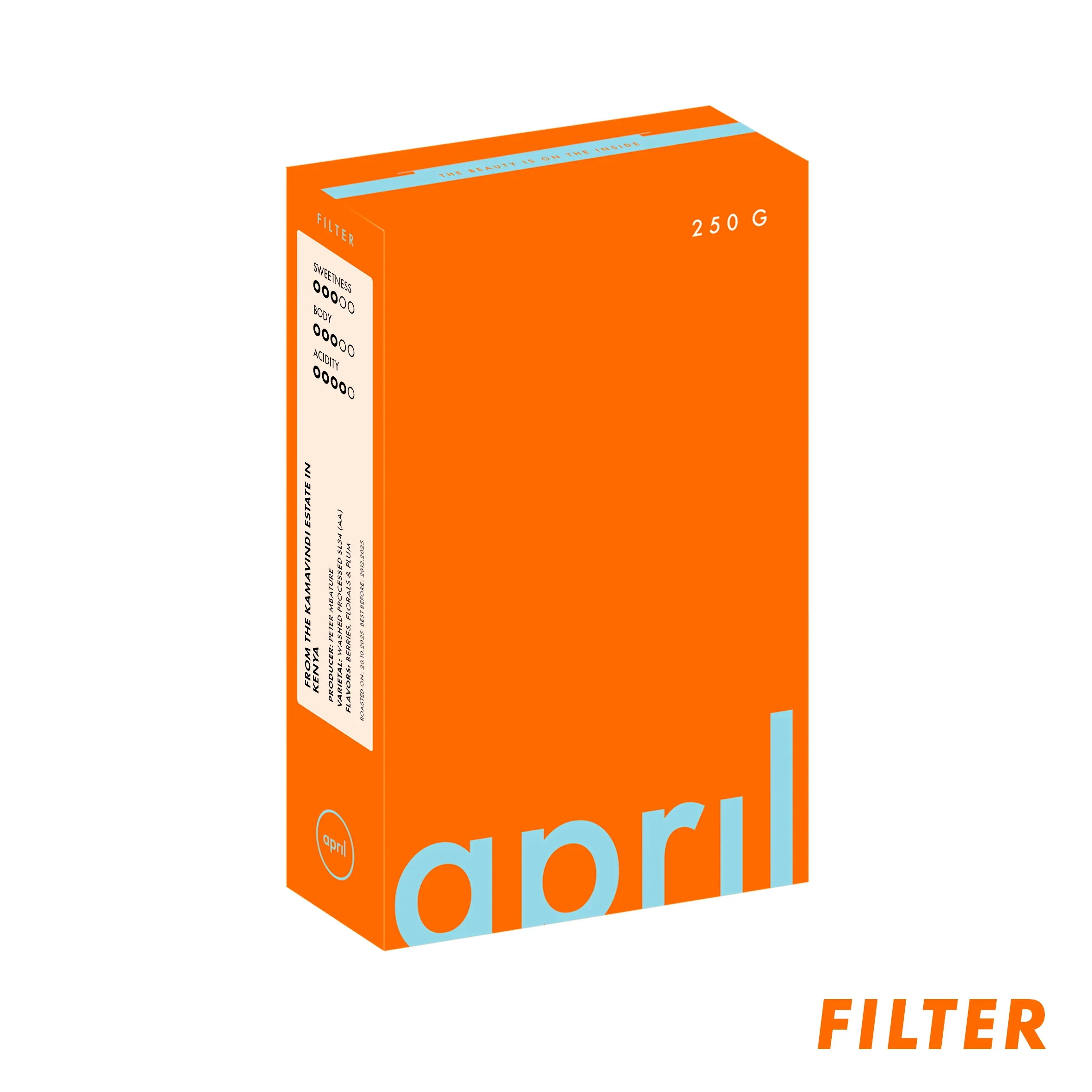
Kenya — Kamavindi Estate — SL34 (AB)
Tastes Like — 🫐 Berries • 🍎 Red Apple • 🫐 Plum
DETAILS
- Producer: Peter Mbature
- Farm: Kamavindi Estate
- Region: Embu, Kenya
- Varietal: SL34 (AB grade)
- Process: Washed
- Altitude: 1750 MASL
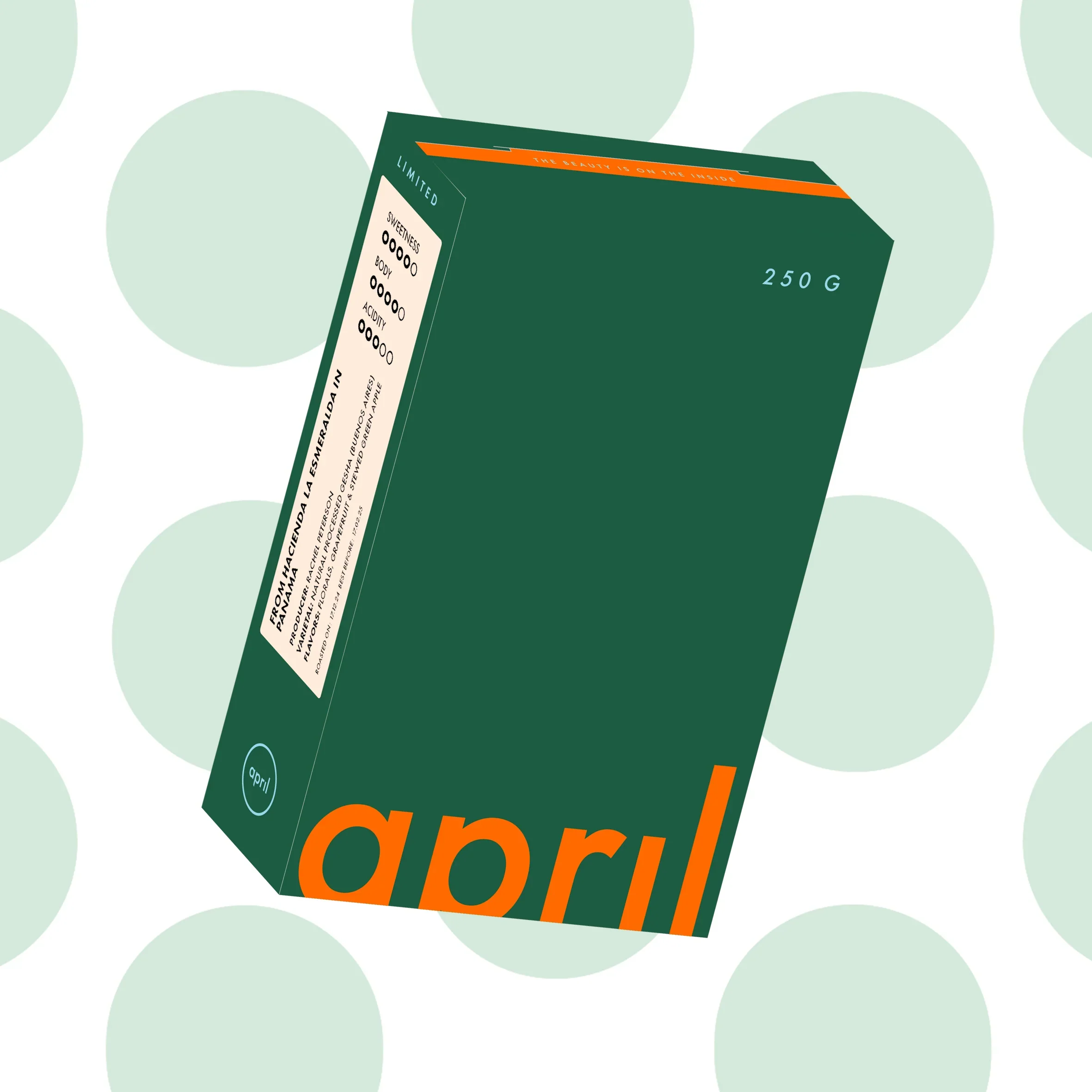
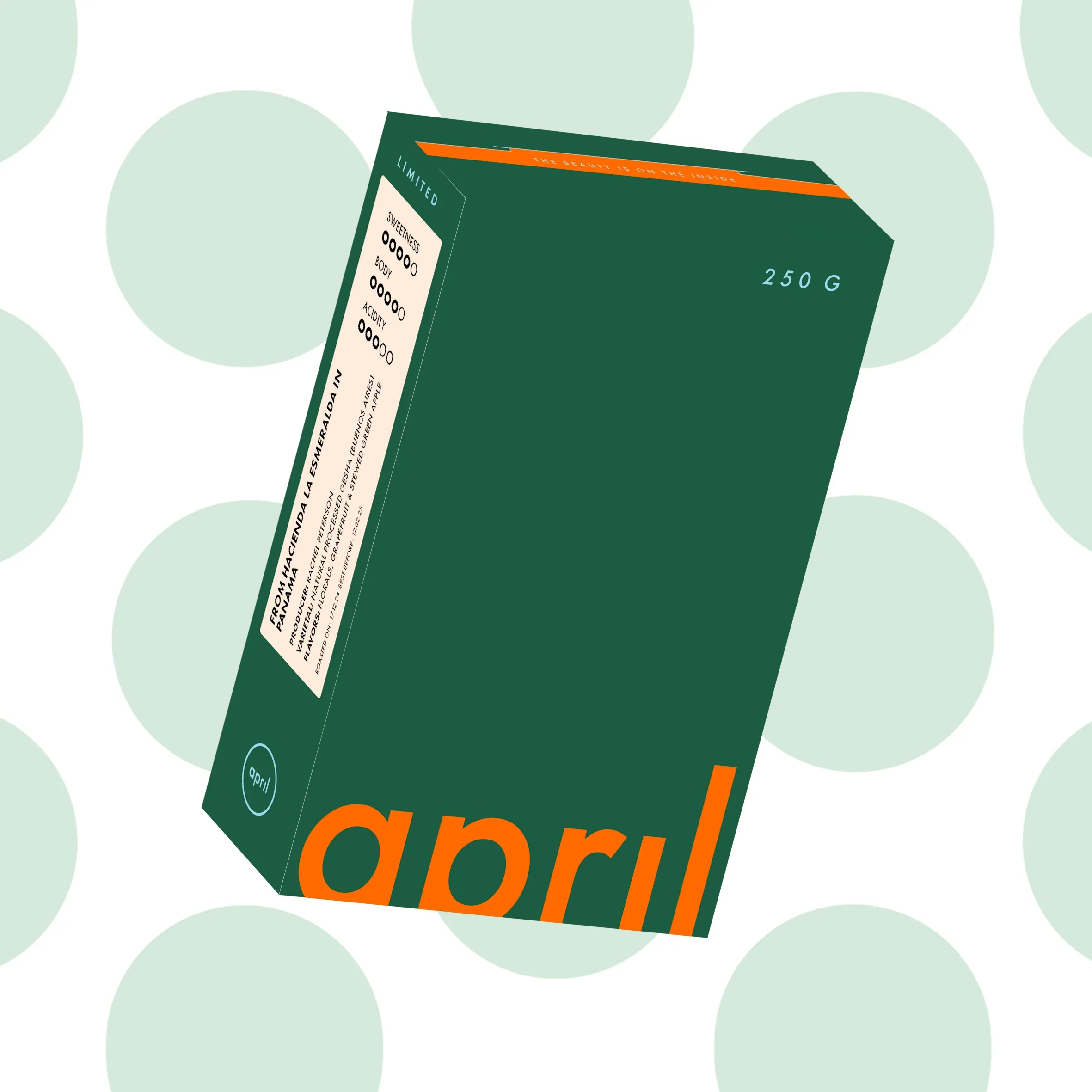
- Size: 250g
INTRO
This varietal-separated SL34 lot at AB grade comes from Peter Mbature's Kamavindi Estate in Embu County, north of Nairobi. Peter is producing several varietals familiar to buyers of Kenyan coffee, from SL28 to Ruiru 11, but he is also proudly farming 300 Gesha trees on his estate. He operates his own wet and dry processing facilities.
THE PRODUCER
Kamavindi Farm was established by the late John Njiru Mbature during British colonial rule in 1958. Initially, the 20-hectare (~50-acre) farm began with just 100 seedlings due to a law restricting native Africans to a maximum of 100 trees. After these restrictions were lifted in 1961, John planted an additional 500 trees.
Over the years, Kamavindi has expanded its land and now boasts a total of 10,000 trees: 7,000 SL28 and 3,000 Ruiru 11. Today, Peter Mbature, his mother Hellen Weveti, and his sister Gladwell Wanjira manage the farm together. They aim to replace the Ruiru 11 trees with SL28, creating a farm of pure SL28. Additionally, they are establishing a training centre to educate farmers and coffee buyers on processing and farm management.
THE PROCESS
After flotation and skimming, the cherries are processed through a two-disk pulper, followed by:
- 🧪 Initial Fermentation — 20-hour fermentation in parchment
- 💧 Light Washing — To remove mucilage
- 📅 Second Hold — Another 20 hours before final wash
- ☀️ Controlled Drying — 14–18 days in temperature-monitored drying room (ambient temperatures not exceeding 24°C)
During this process, careful attention is given to maintaining consistent mass and even temperatures in the tanks to ensure clean fermentation with minimal volatile or acetic acid buildup.
THE CUP
A beautifully structured Kenyan cup with vibrant berry notes, crisp red apple acidity, and rich plum sweetness. The washed process brings exceptional clarity and a crystalline fruit character typical of the finest Kenyan coffees.
Flavour Notes
- 🫐 Berries
- 🍎 Red Apple
- 🫐 Plum
We recommend brewing with beans that are at least two weeks off roast. All beans are roasted to peak flavour at around 8-12 weeks. We have the option to either purchase standard beans (at least 2 weeks but no longer than 6 weeks off roast), or rested beans (at least 7 weeks off roast, no longer than 12). For peak flavour, if you are looking to use immediately, we recommend purchasing the rested beans.
Kenya — Kamavindi Estate — SL34 (AB)
Tastes Like — 🫐 Berries • 🍎 Red Apple • 🫐 Plum
DETAILS
- Producer: Peter Mbature
- Farm: Kamavindi Estate
- Region: Embu, Kenya
- Varietal: SL34 (AB grade)
- Process: Washed
- Altitude: 1750 MASL
- Size: 250g
INTRO
This varietal-separated SL34 lot at AB grade comes from Peter Mbature's Kamavindi Estate in Embu County, north of Nairobi. Peter is producing several varietals familiar to buyers of Kenyan coffee, from SL28 to Ruiru 11, but he is also proudly farming 300 Gesha trees on his estate. He operates his own wet and dry processing facilities.
THE PRODUCER
Kamavindi Farm was established by the late John Njiru Mbature during British colonial rule in 1958. Initially, the 20-hectare (~50-acre) farm began with just 100 seedlings due to a law restricting native Africans to a maximum of 100 trees. After these restrictions were lifted in 1961, John planted an additional 500 trees.
Over the years, Kamavindi has expanded its land and now boasts a total of 10,000 trees: 7,000 SL28 and 3,000 Ruiru 11. Today, Peter Mbature, his mother Hellen Weveti, and his sister Gladwell Wanjira manage the farm together. They aim to replace the Ruiru 11 trees with SL28, creating a farm of pure SL28. Additionally, they are establishing a training centre to educate farmers and coffee buyers on processing and farm management.
THE PROCESS
After flotation and skimming, the cherries are processed through a two-disk pulper, followed by:
- 🧪 Initial Fermentation — 20-hour fermentation in parchment
- 💧 Light Washing — To remove mucilage
- 📅 Second Hold — Another 20 hours before final wash
- ☀️ Controlled Drying — 14–18 days in temperature-monitored drying room (ambient temperatures not exceeding 24°C)
During this process, careful attention is given to maintaining consistent mass and even temperatures in the tanks to ensure clean fermentation with minimal volatile or acetic acid buildup.
THE CUP
A beautifully structured Kenyan cup with vibrant berry notes, crisp red apple acidity, and rich plum sweetness. The washed process brings exceptional clarity and a crystalline fruit character typical of the finest Kenyan coffees.
Flavour Notes
- 🫐 Berries
- 🍎 Red Apple
- 🫐 Plum
We recommend brewing with beans that are at least two weeks off roast. All beans are roasted to peak flavour at around 8-12 weeks. We have the option to either purchase standard beans (at least 2 weeks but no longer than 6 weeks off roast), or rested beans (at least 7 weeks off roast, no longer than 12). For peak flavour, if you are looking to use immediately, we recommend purchasing the rested beans.
Description
Kenya — Kamavindi Estate — SL34 (AB)
Tastes Like — 🫐 Berries • 🍎 Red Apple • 🫐 Plum
DETAILS
- Producer: Peter Mbature
- Farm: Kamavindi Estate
- Region: Embu, Kenya
- Varietal: SL34 (AB grade)
- Process: Washed
- Altitude: 1750 MASL
- Size: 250g
INTRO
This varietal-separated SL34 lot at AB grade comes from Peter Mbature's Kamavindi Estate in Embu County, north of Nairobi. Peter is producing several varietals familiar to buyers of Kenyan coffee, from SL28 to Ruiru 11, but he is also proudly farming 300 Gesha trees on his estate. He operates his own wet and dry processing facilities.
THE PRODUCER
Kamavindi Farm was established by the late John Njiru Mbature during British colonial rule in 1958. Initially, the 20-hectare (~50-acre) farm began with just 100 seedlings due to a law restricting native Africans to a maximum of 100 trees. After these restrictions were lifted in 1961, John planted an additional 500 trees.
Over the years, Kamavindi has expanded its land and now boasts a total of 10,000 trees: 7,000 SL28 and 3,000 Ruiru 11. Today, Peter Mbature, his mother Hellen Weveti, and his sister Gladwell Wanjira manage the farm together. They aim to replace the Ruiru 11 trees with SL28, creating a farm of pure SL28. Additionally, they are establishing a training centre to educate farmers and coffee buyers on processing and farm management.
THE PROCESS
After flotation and skimming, the cherries are processed through a two-disk pulper, followed by:
- 🧪 Initial Fermentation — 20-hour fermentation in parchment
- 💧 Light Washing — To remove mucilage
- 📅 Second Hold — Another 20 hours before final wash
- ☀️ Controlled Drying — 14–18 days in temperature-monitored drying room (ambient temperatures not exceeding 24°C)
During this process, careful attention is given to maintaining consistent mass and even temperatures in the tanks to ensure clean fermentation with minimal volatile or acetic acid buildup.
THE CUP
A beautifully structured Kenyan cup with vibrant berry notes, crisp red apple acidity, and rich plum sweetness. The washed process brings exceptional clarity and a crystalline fruit character typical of the finest Kenyan coffees.
Flavour Notes
- 🫐 Berries
- 🍎 Red Apple
- 🫐 Plum
We recommend brewing with beans that are at least two weeks off roast. All beans are roasted to peak flavour at around 8-12 weeks. We have the option to either purchase standard beans (at least 2 weeks but no longer than 6 weeks off roast), or rested beans (at least 7 weeks off roast, no longer than 12). For peak flavour, if you are looking to use immediately, we recommend purchasing the rested beans.